A Single Regional Fuel Site Could Generate $10M+ Back to Farmers Over 10 Years
Fuel Independence for Australian Agriculture
Produce low carbon fuel directly from your own oilseed crops using 34MJ’s patented turnkey fuel systems, designed for farms, agricultural enterprises and regional farming groups.
15+ Years Operational
Experience
3 Million + Litres Produced
Australian Patented
Technology
Containerised Modular
Systems
15+ Years Operational
Experience
3 Million + Litres Produced
Australian Patented
Technology
Containerised Modular
Systems
Australian Farmers Depend on Imported Fuel
Diesel Volatility – we have seen prices jump 50% from external factors and Government predicts uncertainty is increasing
Freight Costs – Farmers get hit twice fuel prices increase and freight to get their fuel increases.
Supply chain disruption – Any shortage of fuel supply can have a cascading effect on supply chains especially in regional areas
Geopolitical instability – A Nation that runs on transport and foreign fuel, is country that doesn’t have its own security
Regional price disadvantage – Fuel Pricing in regional areas is considerably higher than in our cities, more than the transport costs.
Australia grows oilseed crops, yet regional industries still rely on imported diesel.
A Farm-Owned Fuel Model
Farmers Grow Canola
The cycle starts with a crop already grown across Australian agriculture today.
Seed Processed Through 34MJ LCLF System
The containerised, patented system handles seed processing on site.
Fuel Produced On Farm
Low carbon liquid fuel comes out the other end — produced, not imported.
Fuel Used Locally
The fuel goes straight back into the operation that grew the seed.
Economic Value Returned to Farmers
Value that used to leave the region stays with the farm and the community.
How It Works
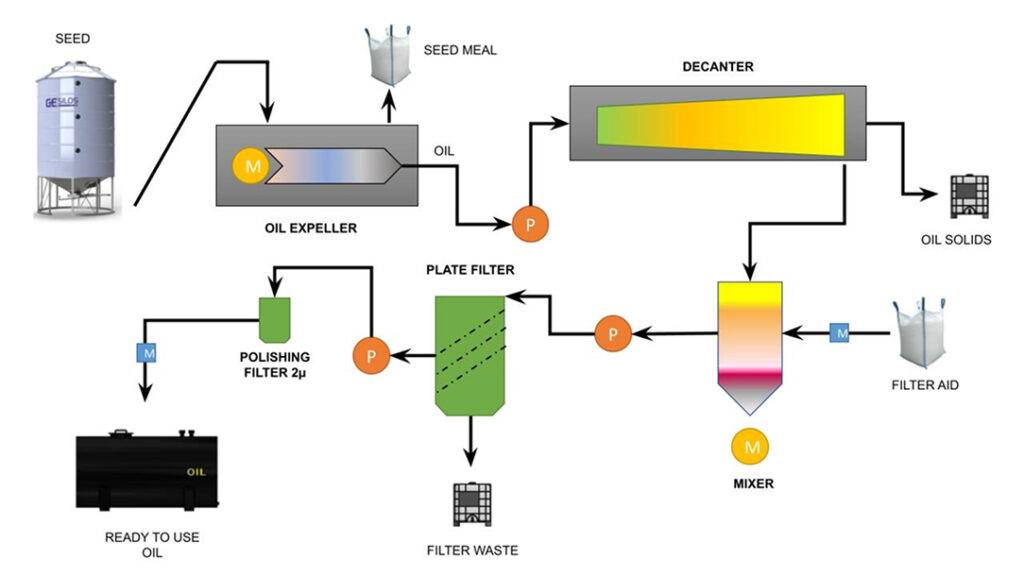
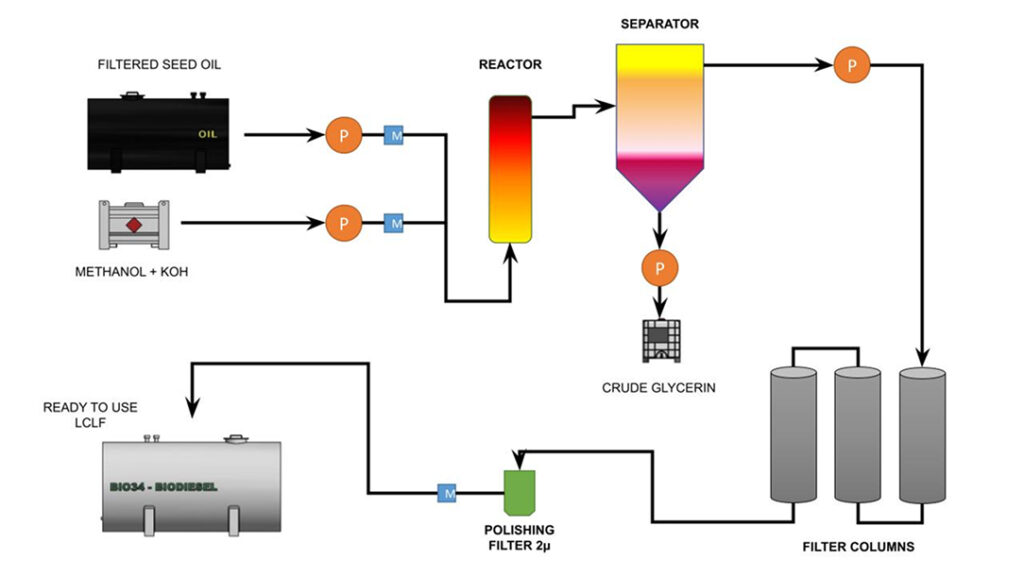
The 34MJ system is a complete, turnkey Seed-to-Fuel solution that enables farms to produce their own Low Carbon Liquid Fuel from canola and other oilseed crops. Oil is mechanically extracted using a screw press, producing both clean vegetable oil and valuable high-protein stock feed as a co-product. The oil is then filtered and processed through our patented low-energy technology, where it is converted into Low Carbon Fuel.
The fuel is refined and purified to produce a high quality drop-in fuel that can be used in existing diesel-powered farm machinery without modifications.
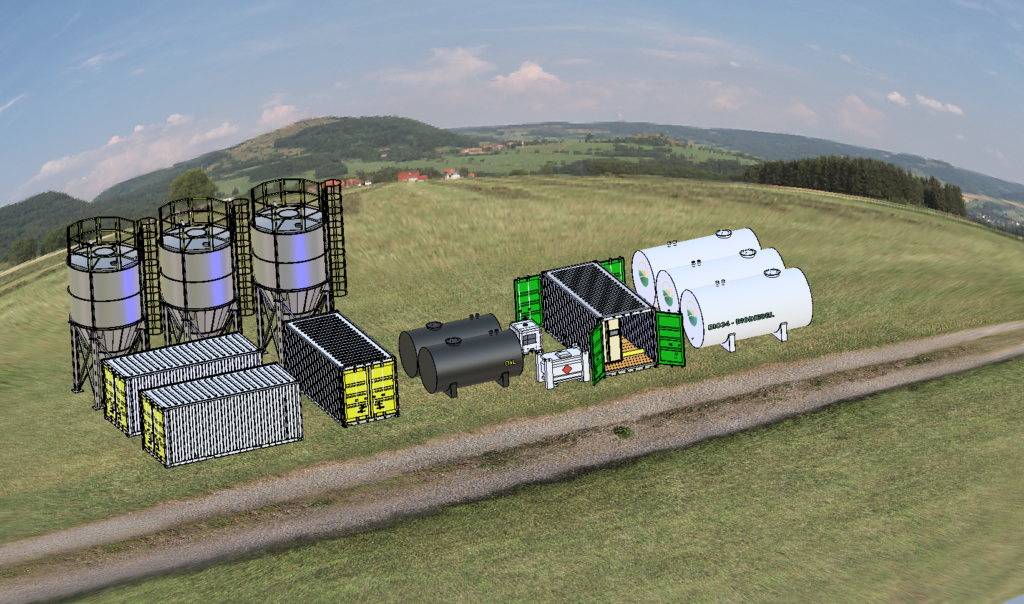
The 34MJ Turnkey LCLF System from Seed to Fuel
Designed for individual agricultural enterprises or collaborative regional farming groups.
Seed Processing
BioDiesel Processing
Infrastructure That Improves Long-Term Farm Resilience
Reduce Fuel Costs
Generate Co-Op Revenue
Built for Regional Farming Groups
34MJ’s Co-Op model is designed to help regional farming groups access fuel production infrastructure that may otherwise be difficult to justify individually. A typical fuel Co-Op may consist of 5–10 farms within a regional area, depending on total fuel demand and operational requirements. By operating collectively, members can share capital investment, infrastructure access and operational benefits, significantly reducing the financial exposure for any single farm.
- Access locally produced fuel at predictable pricing
- Reduce exposure to imported diesel supply volatility
- Improve long-term fuel security for farm operations
- Retain more energy spending within regional communities
- Scale production capacity as regional demand increases
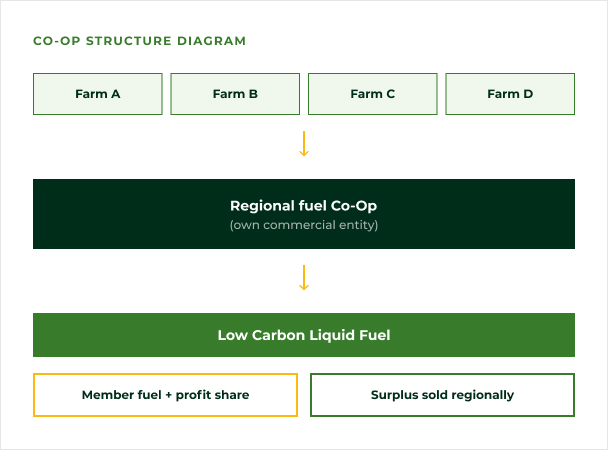
Creating a new revenue for the regions
- Shared infrastructure and reduced capital risk
- Locally controlled fuel production
- Improved fuel availability during supply disruptions
- Potential annual profit distributions to members
- Additional regional economic activity and job creation
- Scalable pathway from farm-scale systems to regional fuel hubs
Infrastructure That Improves Long-Term Farm Resilience
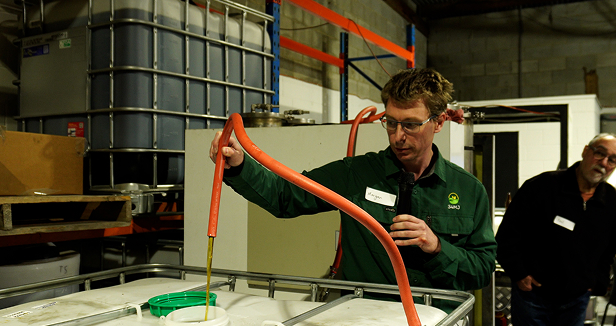
15+ Years of Operational Experience – We have been building and developing renewable fuels equipment designed for farmers.
Operating in Real Farm Environments – Our equipment have been producing fuel on farms since 2012
Australia Already Grows the Feedstock
Australia produced 6.8 million tonnes of canola in 2024–25, with approximately 3.3 million tonnes exported overseas, much of it used for renewable fuel production in foreign markets. Meanwhile, Australia remains heavily dependent on imported liquid fuels.
According to CSIRO Australia could produce approximately 800 million litres of renewable fuel annually from canola.
Australia is expected to require 30 BL of liquid fuel per year post-2050
34MJ’s patented Low Carbon Liquid Fuel system creates an opportunity to retain more of this value within regional Australia.
Using Existing Canola Exports of 3.3 million tonnes could produce approximately 1.25 BL of Low Carbon Fuel, Equivalent to roughly 60% of Australian agricultural diesel demand
Instead of exporting raw commodities and importing fuel back at higher cost, 34MJ enables agriculture to participate further along the energy value chain.
Potential Government Funding Support
FAQ
Is biodiesel manufactured according to a standard? Which one?
Yes. Biodiesel used for commercial and industrial applications is typically manufactured according to the ASTM D6751 standard which is a United States Standard and EN 14214 in Europe Standard. These standards ensure fuel quality, including specifications for flash point, viscosity, sulphur content, and water content.
All Biodiesel sold in Australia has to meet the Australian biodiesel quality standard, as defined by the Fuel Quality Standards (Biodiesel) Determination 2025, specifies that any biodiesel component in diesel must meet the requirements set out in this determination. This standard outlines the technical requirements for biodiesel, including limits similar to those found in international standards like ASTM D6751 and EN 14214, but it’s not identical to either. Essentially,
it ensures the biodiesel used in Australian diesel blends meets a certain quality threshold.
At 34MJ we conduct in house testing on all fuel made and we send batch samples of our fuel made to an independent lab for testing against the Fuel Quality Standards.
Is there a spec sheet available for the biodiesel?
Yes. A comprehensive specification sheet is available upon request. This sheet includes critical parameters such as:
- Viscosity
- Cetane number
- Cloud point
- Pour point
- Sulphur content
- Acid number
These properties help users understand how the fuel will behave under various operating conditions. Our specification sheet is in line with the Fuel Quality Standards.
What are the pros and cons of using biodiesel?
Pros:
- Renewable and sustainable
- Reduces greenhouse gas emissions (up to 75%)
- Biodegradable and non-toxic
- Compatible with most modern diesel engines (up to B20 without modification)
- Supports local agriculture and circular economy initiatives
- Lower tailpipe emissions
- Made from waste materials (used cooking oil) and non-food-grade canola
Cons:
- B100 has a higher cloud point, which may affect cold-weather performance,
- Solvent properties may initially clean fuel systems, potentially leading to filter clogging
- Slightly lower energy content than petroleum diesel (~8-10% lower for B100)
- Not all OEMs approve use of blends above B20 without further testing
The cloud point of B100 starts around −3°C for canola based biodiesel. The pour point of B100 is usually only a few degrees lower than the cloud point, so once biodiesel begins to freeze, gelling can occur rapidly if the temperature drops only a few degrees further. If you operate in areas of below freezing we do not recommend running B100.
B100 is a good solvent. It may loosen or dissolve varnish and sediments in fuel tanks and fuelling systems left by conventional diesel or other fuels over time. This may be especially true in systems that have never used biodiesel. If a system contains sediments, the tanks and fuel system should be cleaned before B100 is handled or used. A good indication that B100 is cleaning the tank is an initial increase in filter plugging. Over time, filter change intervals should return to normal. This should not be an issue for B20 or lower blends. Spills should be cleaned up immediately, as B100
may not be compatible with some types of paint Many OEM’s allow biodiesel usage within their vehicles these include but not limited to Cummins, SCANIA, VOLVO, CAT, and John Deer.
Note: Conducting trials with appropriate expectations and technical support reduces risks. We provide guidance and filtration to mitigate common concerns.
What does B100 mean?
B100 refers to 100% pure biodiesel. The “B” number indicates the percentage of biodiesel in a fuel blend. Biodiesel can be blended and used in many different concentrations, including B100 (pure biodiesel) For example:
- B100 = 100% biodiesel, 0% petroleum diesel
- B20 = 20% biodiesel, 80% petroleum diesel
- B50 = 50% biodiesel, 50% petroleum diesel
B5 (5% biodiesel, 95% petroleum diesel) and below is classified as petroleum diesel.
Importantly, B100 is a concentration metric, not a quality grade. Quality depends on compliance with ASTM/EN standards.
Has this product been approved for use by engine and vehicle manufacturers?
Many major engine and vehicle manufacturers approve blends up to B20, including Caterpillar, John Deere, Cummins, and others, many US and Europe based OEM’s support higher blends (e.g., B100).
Majority of large commercial vehicles only have a one year warranty on their engines. The main issue with Biodiesel and engine compatibility is the seals and hoses. Seals that are made with Viton and Buna are compatible with biodiesel, with some nitrile rubber able to handle B20 with no issue. Natural rubbers swell with the use of biodiesel, from our experience these seals will lot leak but will need to be replaced in a maintenance cycle.
Does Biodiesel clog my filters?
Biodiesel as a fuel doesn’t clog your filters, but what the biodiesel dose is it removes the build-up of varnish and sediments in fuel tanks and fuelling systems. This material ends up in the vehicles fuel filter, as majority of vehicle fuel filters are a bypass this can cause issues if the filters are not replaced.
The following is our recommendation of filter replacement when transitioning to biodiesel for the first time.
0-1 year old: no issue follow standard maintenance schedule
1-5 years old:
- 2 Tanks of B20 – Replace filter
- 5 tanks of B20 – Replace filter
- 5 Tanks of B50 – Replace Filter
- 2 Tanks of B100 – Replace Filter
- Ongoing follow standard maintenance schedule
5+ years old:
- 2 Tanks of B10 – Replace filter
- 2 Tanks of B20 – Replace filter
- 5 tanks of B20 – Replace Filter
- 5 Tanks of B50 – Replace Filter
- 5 Tanks of B50 – Replace Filter
- 2 Tanks of B100 – Replace Filter
- 5 Tanks of B100 – Replace Filter
- Ongoing follow standard maintenance schedule
One I make the transition can I go back and forth between petroleum diesel and biodiesel?
Yes, you can use biodiesel and diesel fuel interchangeably, as well as blended, once you have done the initial filter change process. If you use petroleum diesel for longer than 1 year straight then we recommend going through the transfer process again.
Do I need special storage facilities?
NO! Follow the same fuel rules you would with any fuel. Keep it in a leak free container that isn’t clear and can be sealed when not in use. In general, the standard storage and handling procedures used for petroleum diesel can be used for biodiesel. The fuel should be stored in a clean, dry, dark environment.
How long does Biodiesel last for?
Biodiesel has the same life span as petroleum diesel. If it is stored in a full sealed tank out of direct light can last for up to one year. We recommend that biodiesel is used within 6 months; this will prevent moisture build up and organic contamination.




The Future of Agricultural Fuel Is Local
Explore how a 34MJ system could support your farm, enterprise or regional farming group.

Australian Agtech, Patented low-carbon liquid fuel systems for farms and regional farming groups.